

Open the template dashboard
Go to the WhatsApp API Campaign template dashboard, then click Create new template.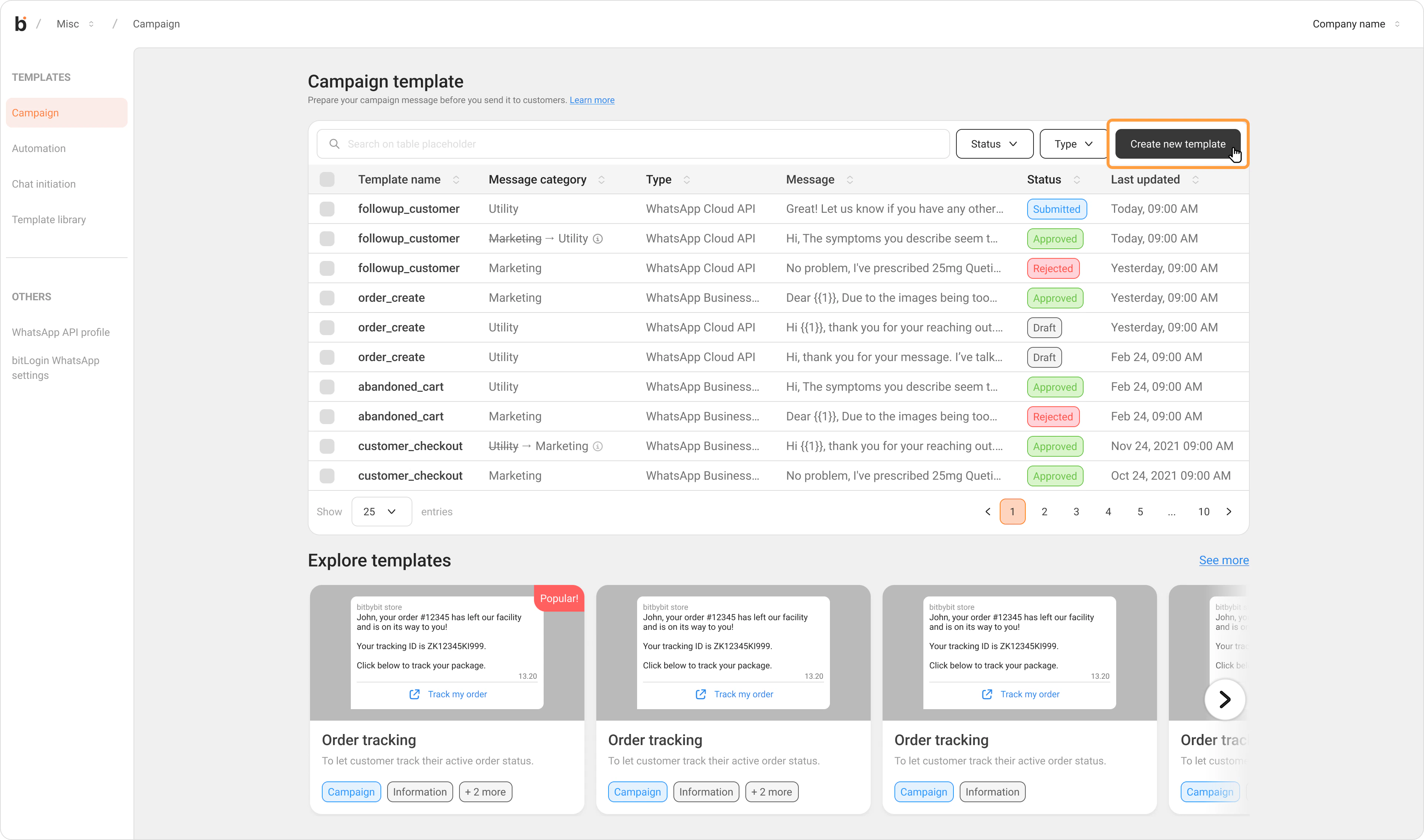
Complete Template setup
The first step of the wizard is Template setup. Fill in:The unsubscribe info panel appears in this Template setup step, so you can review opt-out behavior before adding your content. For details on how unsubscribe works, see Understanding the Unsubscribe Option for Messages.When you’re done, click Next to move to Message content.
- Template name — required. The Next button stays disabled until you enter a name.
- Languages
- Message category — see below.
-
Template type — see below.
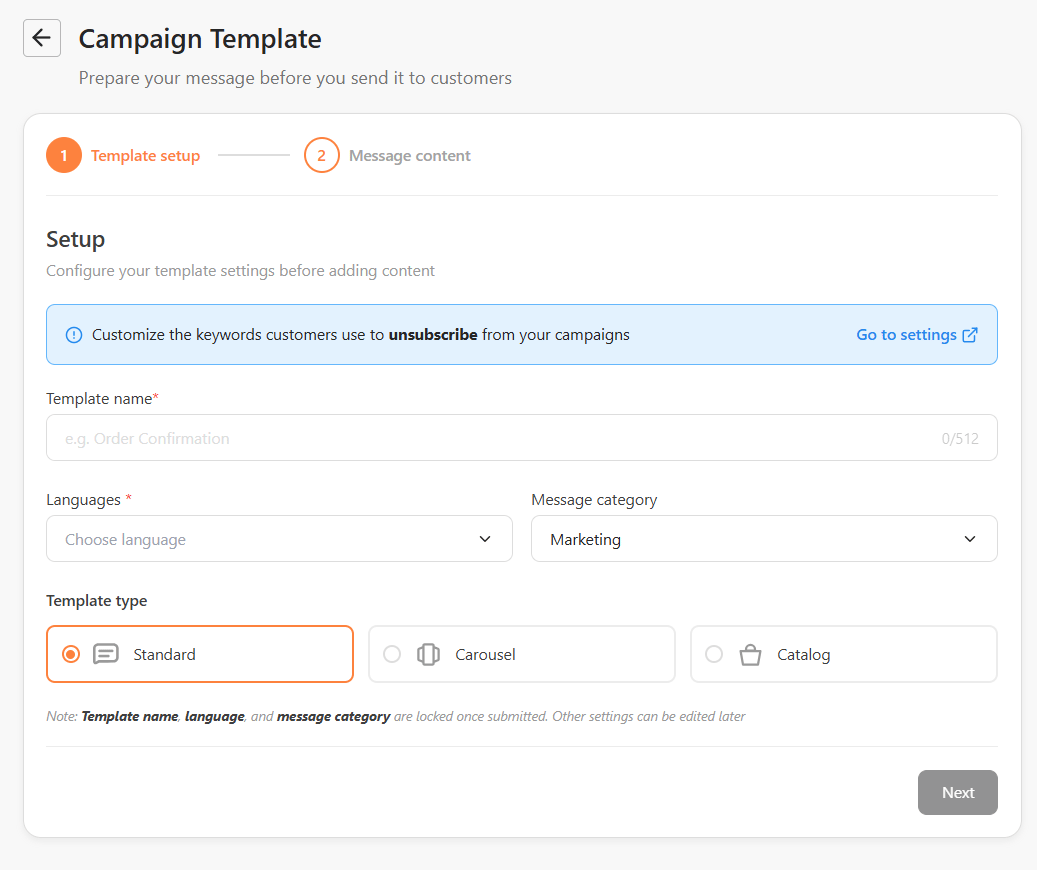
Select a Message category
In the Message Category dropdown, choose the category that best describes your template:- Marketing (default) — Promotional messages such as offers, announcements, or product updates.
-
Utility — Transactional messages such as order confirmations, shipping updates, or account alerts.
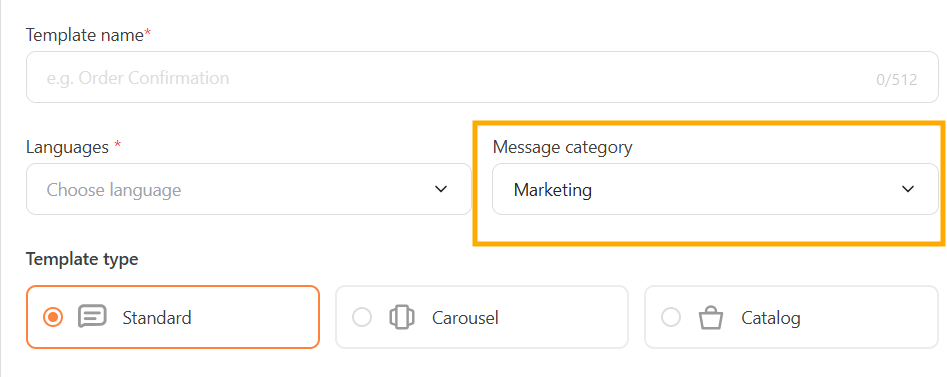
Choose a Template type
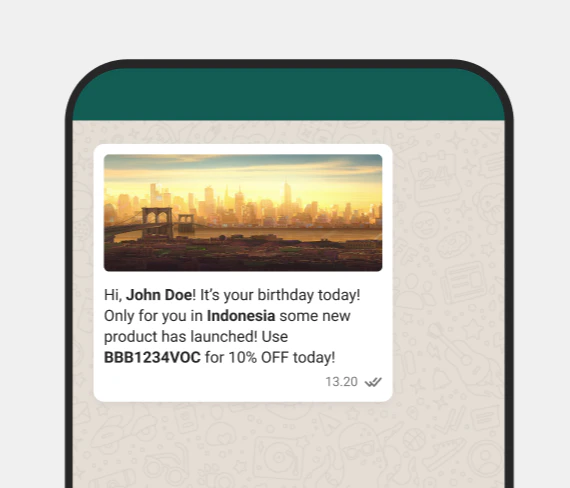
Pick one of three template types. The phone preview updates to match your choice.- Standard — a text-based template, with optional header, footer, and buttons.
- Carousel — a scrollable set of cards, each with its own media and buttons.
-
Catalog — showcases products from your catalog.

If you set the Message category to Utility, the template type is locked to Standard and the type options are hidden.
Add your Message content
The second step of the wizard is Message content. The fields available here depend on the template type you chose.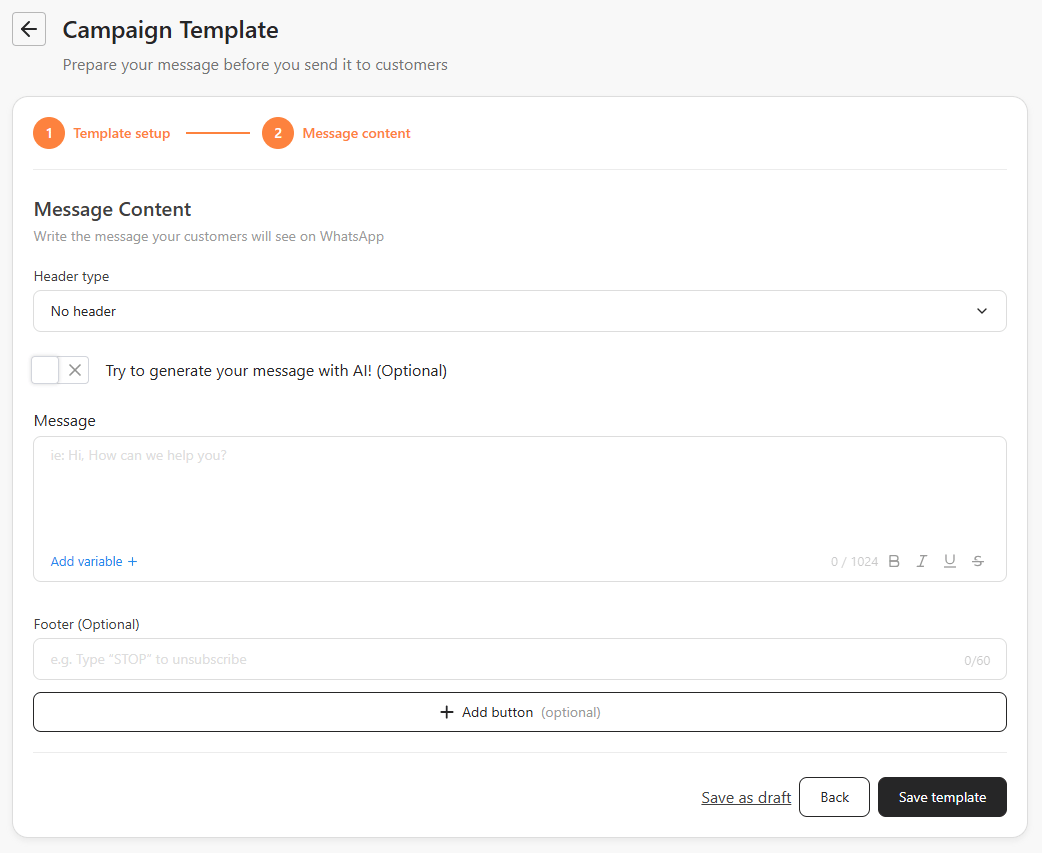

Message body and variables
Enter your message content, then add dynamic variables by clicking “Add Variable +” and selecting “Variable” from the dropdown. Read How to Use Dynamic Variables in Automation Messages for more details about using variables.Header and Footer (optional)
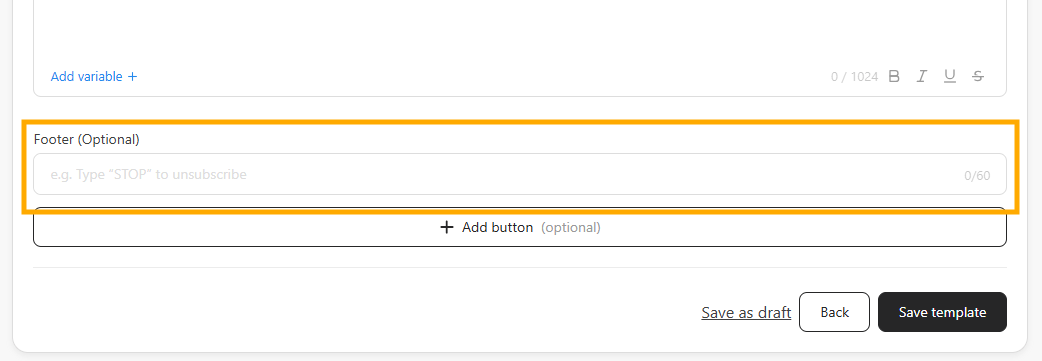
You can add a Header and Footer to give your message more structure. Both fields are optional.Header
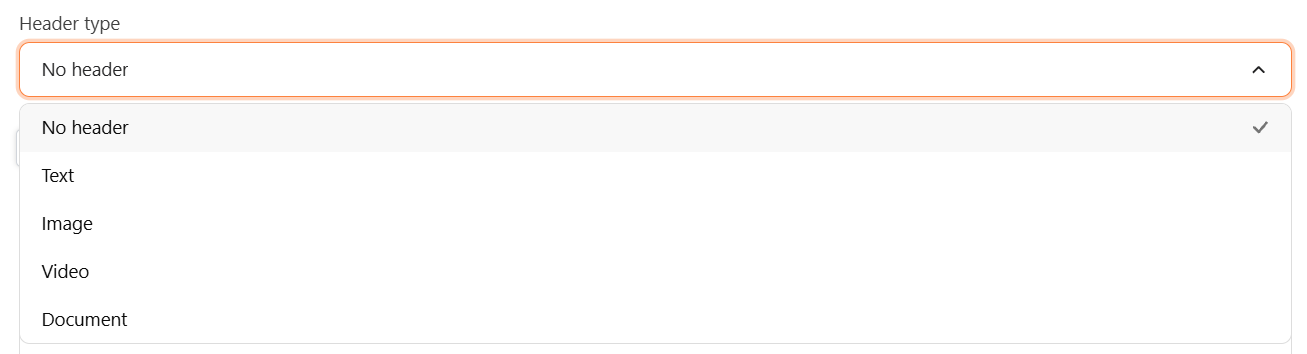
Choose one of four header types from the Header dropdown:Footer
Enter a short line of text to appear below the message body. Maximum 60 characters.Availability by template type
Buttons: If your template includes a reply button, WhatsApp Form, call-to-action, or copy offer code button, the header and footer remain visible.
Buttons (optional)
Add interactive buttons to your message by clicking Add button. Buttons are now added directly through this action — there is no separate switcher to enable them.You can add:- Reply button — lets recipients respond with a quick, predefined reply.
- Call-to-action — links to a web URL, product, or collection.
- WhatsApp Form — collects structured responses from recipients.
- Copy voucher action — lets recipients copy an offer code with one tap (Campaign templates only).
Configure Carousel cards
Configure Carousel cards
For a Carousel template, add and arrange cards in the card settings:
- Reorder cards by dragging them into the order you want.
- Set each card’s media type to Image (JPEG or PNG) or Video (MP4).
Configure Catalog content
Configure Catalog content
A Catalog template showcases products directly from your connected WhatsApp catalog, so recipients can browse your items inside the message. Configure the catalog content in the Message content step. To set which catalog your products come from, see How to Choose Your WhatsApp Catalog Source.
Submit to Meta
Click Save template to submit it to Meta for review.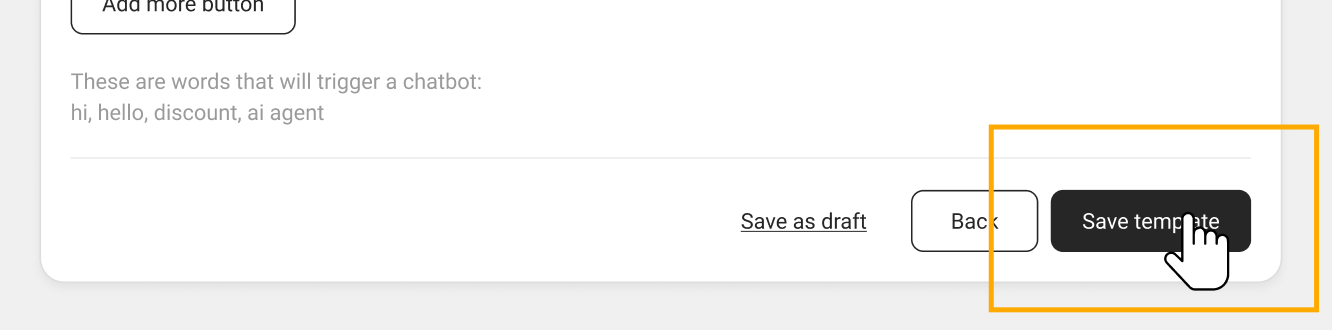
Watch the video walkthrough
Watch the video walkthrough